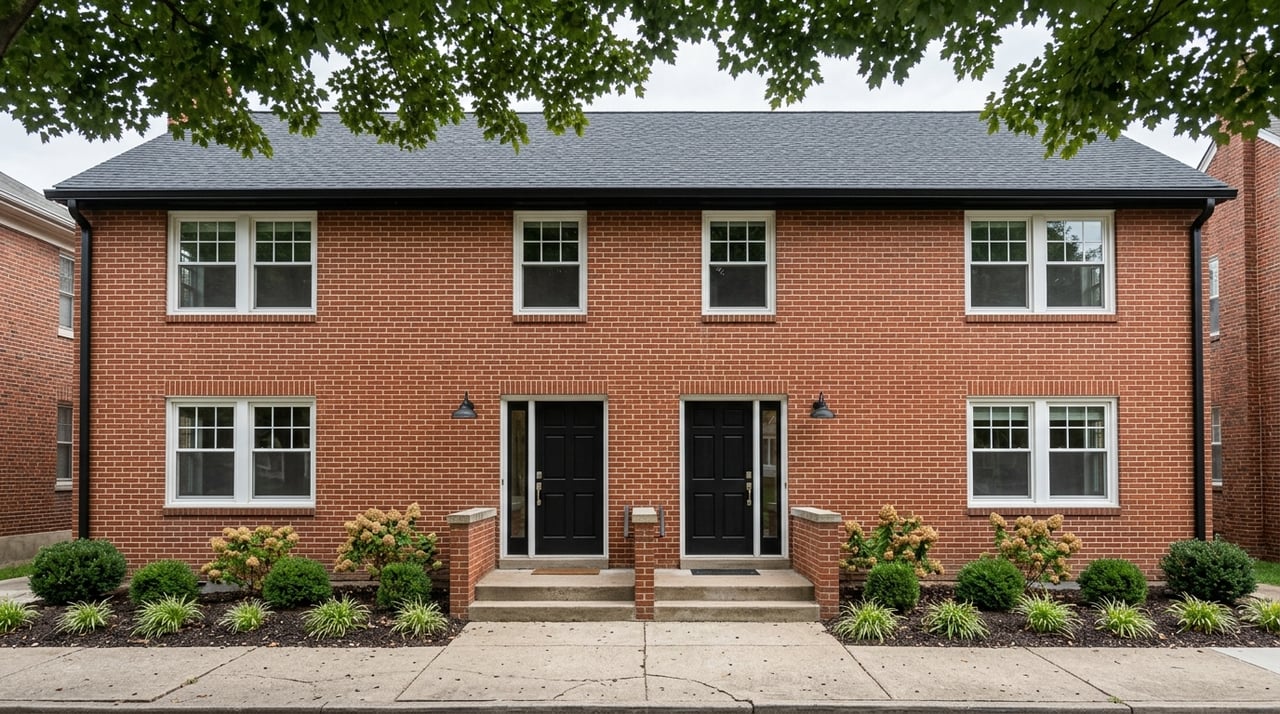
Curious whether a Grandview Heights duplex can help you lower your housing costs while building long-term value? If you are thinking about living in one unit and renting out the other, you are not alone. In a compact, amenity-rich city like Grandview Heights, the idea can be appealing, but the details matter. This guide walks you through what to confirm before you buy, what the city rules may require, and what can shape rental appeal in 43212. Let’s dive in.
Why a Grandview Heights duplex draws interest
Living in one unit and renting the other can offer a practical path for buyers who want both a home and an income-producing property. It can also appeal to owners who want to offset part of their monthly housing expense while staying in a close-in Columbus location.
Grandview Heights is a small city with 9,184 residents across 1.32 square miles, according to Census QuickFacts. The same source reports owner-occupied housing at 55.9%, median gross rent at $1,750, and median owner-occupied home value at $583,300. Those numbers help frame why duplexes can attract attention from both owner-occupants and local investors.
The city also describes itself as highly walkable, and its sidewalk program connects sidewalk quality to neighborhood livability and commercial vibrancy. Grandview Heights reports about 45 acres of parkland and green space, along with more than 350 recreation programs and special events annually and 21 parks and facilities in current master-plan materials.
Taken together, those features can support rental demand for a duplex, especially for renters who value walkability, neighborhood services, and a small-city setting near Columbus. That said, demand is never guaranteed, and each property still needs careful underwriting.
Start with zoning first
Before you get attached to a specific duplex, confirm the parcel’s zoning district. Grandview Heights provides both a PDF zoning map and an interactive zoning map, and the city directs residents to the zoning code for use questions.
That step matters because a two-family dwelling is not treated the same way in every district. The city defines a dwelling, two-family as a dwelling intended for two families, with only two dwelling units and separate entrances.
In RD, two-family dwellings are a permitted use. In RPU, they are also permitted. In RS-1 and RS-2, a two-family dwelling is a conditional use tied to the surrounding block’s existing pattern of two-family or two-family and multi-family homes, and Planning Commission review is part of that process.
In plain terms, one Grandview Heights duplex may be straightforward from a zoning standpoint, while another may involve added review or a harder approval path. That is why your first due diligence question should be simple: is this duplex a permitted use, a conditional use, or something that may be nonconforming?
Understand what conditional use means
If a duplex falls into a conditional use category, the city does not treat it as automatically allowed. The zoning code defines a conditional use as a use allowed only after Planning Commission review and approval for compatibility with the district.
For a buyer, that means you should ask early whether the current use is already established in a compliant way or whether future changes could trigger review. This is especially important if you are planning improvements, reconfiguration, or a purchase that depends on a very specific use plan.
The Building & Zoning Department also facilitates the Board of Zoning Appeals for residential projects. If a property has unusual facts, it is wise to clarify the status before closing rather than after you take ownership.
Check the building layout and site fit
Not every two-unit property is arranged the same way. The housing code refers to a one-floor double house, two-floor double house, and two-family dwellings arranged one over the other. That suggests duplexes in Grandview Heights may appear in more than one layout, including side-by-side or stacked configurations.
For you as a buyer, layout affects more than convenience. It can influence privacy, access, utility planning, renovation scope, and future tenant appeal.
It also helps to compare the building’s current configuration with how it functions day to day. Separate entrances, storage, laundry access, and outdoor space may not change the legal definition on their own, but they can affect how comfortably you can live in one unit while leasing the other.
Parking can make or break the property
Parking is one of the most important practical tests for a duplex in Grandview Heights. The city requires two off-street parking spaces per dwelling unit for single-family and two-family dwellings.
That means a duplex generally needs four off-street spaces. On a compact lot, that requirement can become a major factor in whether the site works well as-is or whether changes may be difficult.
The city’s residential parking rules also generally keep parking out of front and side yards except in a legal driveway. So even if a lot seems to have room, the usable parking arrangement still needs to comply with city rules.
When you tour a property, do not just count cars in the driveway on showing day. Look at the site carefully and confirm whether the parking setup appears consistent with the property’s legal use and the city’s standards.
Know when permits and inspections apply
If you want to add, convert, enlarge, or substantially alter space in order to create or improve a duplex, Grandview Heights requires permits. The Building & Zoning Department processes permits and inspections through OpenGov.
The department says it issues permits, reviews construction documents, performs inspections, and enforces code compliance. That makes the city a central part of your planning if your strategy involves renovations instead of simply occupying and leasing the property in its current form.
This is one reason buyers should separate a property’s current condition from its future potential. A duplex that looks like an easy value-add opportunity may still require approvals, inspections, and construction review before your plan can move forward.
Think carefully about occupancy and use
The zoning code’s occupant definition is worth noting if your plan is to live in one unit. The code defines an occupant as a legal owner or a lessee using the dwelling as a primary and permanent residence.
That matters because owner-occupying a duplex is different from using it only as an investment property. It can affect how you think about financing, insurance, reserves, and day-to-day management.
If you are comparing options, be clear about your actual plan from the start. A duplex you intend to live in can have a different financial structure than one you plan to hold strictly as a rental asset.
Short-term rental rules are different
Some buyers ask whether they can pivot from a standard lease to short-term rental use later. In Grandview Heights, a short-term rental is treated differently from a typical lease.
The city defines a short-term rental as a stay of less than 30 consecutive days. It requires Planning Commission authorization, registration, a team inspection, insurance of at least $300,000, smoke detection, fire extinguishers, egress compliance, parking compliance, and 12-month renewal.
That is a much more involved path than simply renting a unit under a standard residential lease. If short-term rental income is central to your plan, verify the rules early and underwrite conservatively.
Underwrite the duplex like both a home and an asset
A live-in duplex is part residence and part investment, so your review should reflect both. The property needs to work for your lifestyle, but it also needs to make sense as an income-producing asset.
Good questions to raise with your lender, attorney, and tax advisor include:
- How projected rent will be counted
- What reserve requirements may apply
- Whether owner-occupancy changes loan terms
- How insurance should be structured
- What tax reporting issues may come with living in one unit and leasing the other
These questions are especially important when two similar-looking duplexes create very different ownership experiences. A better purchase is not always the one with the highest projected rent. Often, it is the one with the clearest legal use, better site fit, and fewer surprises.
Why location can support tenant appeal
Grandview Heights offers several features that can make a duplex attractive to renters. The city describes Business, Town Center uses as neighborhood-oriented and pedestrian-oriented, and community materials highlight a strong business community, a thriving cultural environment, and the mixed-use Grandview Yard district.
For many renters, that kind of setting can be a real draw. Easy access to services, parks, sidewalks, and nearby employment centers often matters just as much as the unit itself.
Still, rental appeal should be viewed as a market advantage, not a guarantee. The right way to evaluate a duplex is to pair Grandview Heights’ local amenity base with property-specific due diligence on zoning, parking, condition, and financial structure.
What smart buyers do before making an offer
If you are serious about buying a duplex in Grandview Heights, a careful pre-offer checklist can save time and money. It can also help you avoid falling in love with a property that does not fit your actual goals.
Here is a strong starting point:
- Confirm the exact parcel zoning
- Verify whether the two-family use is permitted, conditional, or potentially nonconforming
- Review the parking layout for the required off-street spaces
- Ask whether any planned improvements would require permits or review
- Clarify whether your strategy is owner-occupancy, standard leasing, or something else
- Review projected numbers with your lender and professional advisors
That kind of preparation helps you move with more confidence. It also puts you in a better position to spot the difference between a duplex that only looks promising and one that truly fits your goals.
If you are considering a Grandview Heights duplex, the right guidance can help you balance neighborhood fit, city requirements, and investment logic. For tailored advice on evaluating opportunities in 43212 and across Central Ohio, connect with Cece Miller.
FAQs
What is a two-family dwelling in Grandview Heights?
- Grandview Heights defines a two-family dwelling as a dwelling intended for two families, with only two dwelling units and separate entrances.
What zoning should you check for a Grandview Heights duplex?
- You should confirm the parcel’s exact zoning district first because two-family dwellings are permitted in some districts, such as
RDandRPU, but may be conditional inRS-1andRS-2.
What parking is required for a duplex in Grandview Heights?
- The city requires two off-street parking spaces per dwelling unit for single-family and two-family dwellings, and residential parking generally cannot be placed in front or side yards except in a legal driveway.
What permits might apply to a Grandview Heights duplex project?
- If you plan to add, convert, enlarge, or substantially alter space, Grandview Heights requires permits, and the Building & Zoning Department handles permit processing and inspections.
What counts as a short-term rental in Grandview Heights?
- A short-term rental is a stay of less than 30 consecutive days, and the city requires authorization, registration, inspection, insurance, safety measures, parking compliance, and annual renewal.
Why can Grandview Heights support duplex rental demand?
- Grandview Heights offers a compact, walkable setting with parks, recreation facilities, neighborhood-oriented commercial areas, and proximity to Columbus, which can support tenant appeal even though rental demand is never guaranteed.